
PHOTO
62920.0
The decent drop of rain that we experienced a couple of weeks ago was just what the region needed after such a long hot and dry spell over the summer.
Though follow-up rain is still very much needed, what we had was certainly enough to spark many changes in our local environment, one obvious feature being an increase in frog activity.
The parts of our landscape that are the wettest – our rivers, creeks, lakes and swamps, encompass a variety of habitats that support many different types of frogs, of which there are about a dozen species found throughout the North East.
Some species of frogs are seen year-round while others are much more mysterious in their behaviour.
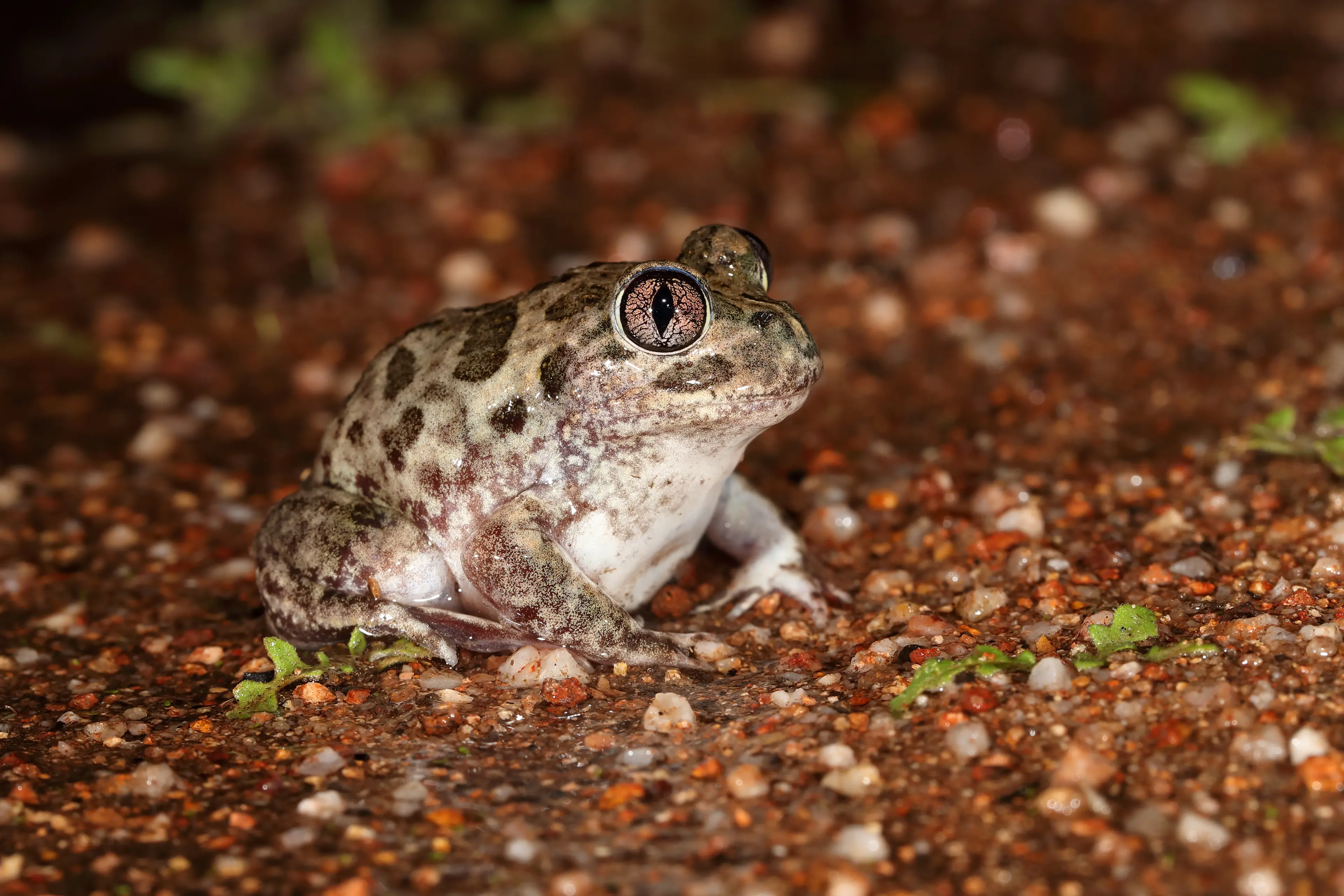
For example, the Sudell’s Frog, a burrowing species that spends most of its time buried underground, emerges only after soaking rains.
In these conditions, they don’t just appear in our wetlands, creeks and bogs.
They can turn up in all sorts of places, even in the middle of paddocks, as they often wander far from water once they are active at night.
Formerly known as the Common Spadefoot Toad, the Sudell’s Frog, as it is currently known, is a much more accurate name for the species because it is actually a true ‘frog’ rather than a toad.
In fact, there are no true ‘toads’ found in Australia, with the exception of course of the introduced Cane Toad in northern Australia.
Toads differ from frogs in that they typically have rough warty skin, short front limbs and large ‘poison’ (paratoid) glands on the back of their head.
Also, many toads crawl (rather than hop like frogs), and they lay their eggs in long strands (rather than foaming clumps that float on the surface of the water).
Sudell’s Frogs are quite distinct from other frog species in that they are quite stocky in appearance, they have large bulging eyes with slightly vertical pupils and they have fully webbed toes.
On the under surface of each foot, they have a blade-like structure called a burrowing tubercle which helps them to dig into the soil and bury themselves during dry times, emerging again after the next rains.
Once active, males give a very conspicuous breeding call – a hoarse ‘craaaaaawk’ while floating on the surface of shallow water.
This sound, among other frog calls, is common across much of the region at the moment.