
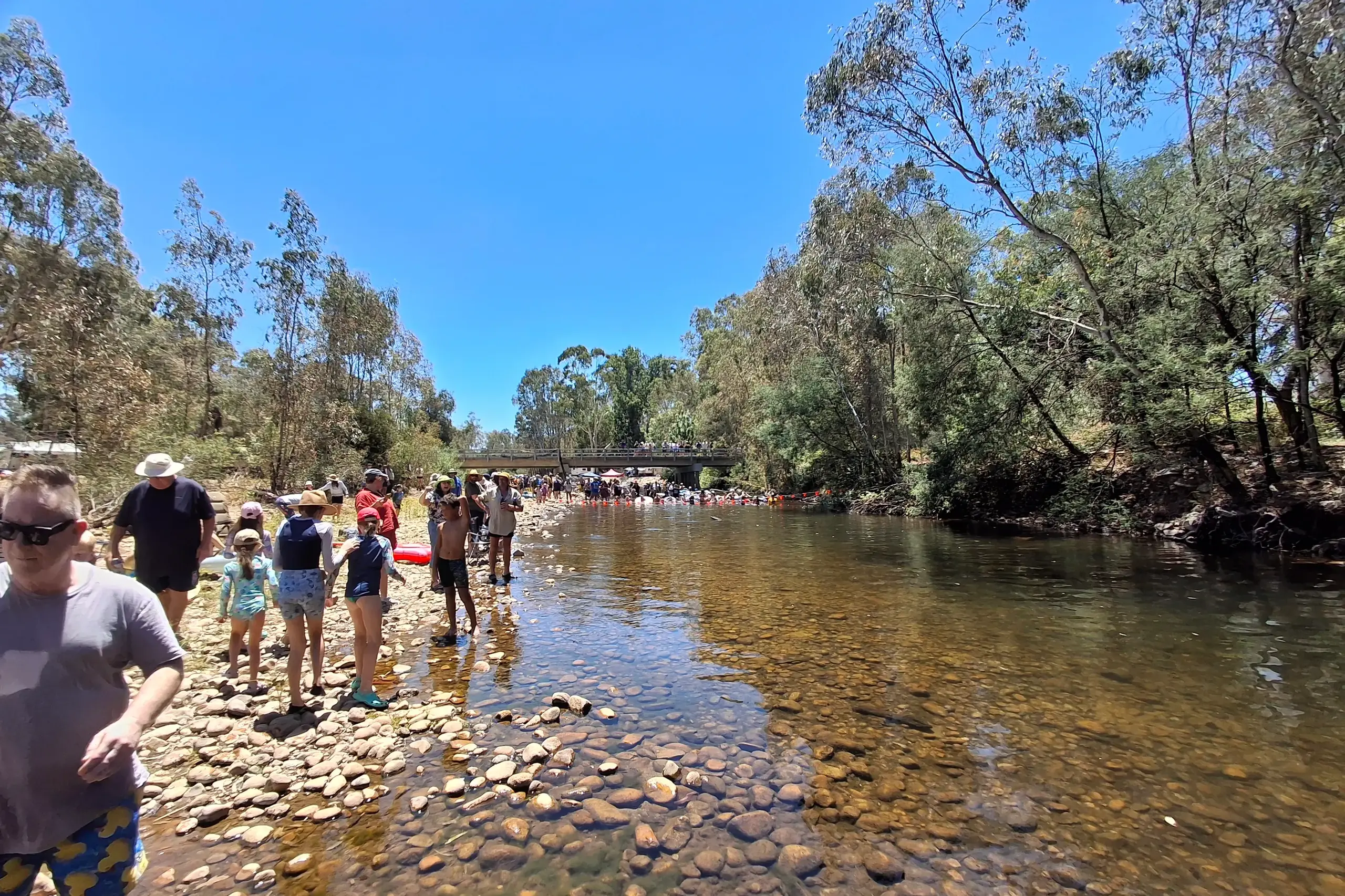
PHOTO
The first month of 2026 has been notably warmer and drier than normal in Victoria.
The one main exception was the heaviest summer rains in the Otway area since 1954.
Wangaratta and other centres in North East Victoria have experienced the warmest January since 2019 with mean maximum temperatures of just over 35 degrees being just over three degrees above normal for January.
Other warmer Januaries were in 1939 and 1981.
Mean minimum temperatures were around 15 and 16 degrees - about a degree above normal.
The highest temperatures for January were 45.2 degrees at Wangaratta, 46 degrees at Yarrawonga, 45.6 degrees at Rutherglen, 45.1 degrees at Albury, 45.3 degrees at Corowa and 43.9 degrees at Benalla.
The hottest days were Thursday, 8 January, Sunday, 25 January and Wednesday, 28 January which quickly followed Ceduna's hottest ever day last Monday, 26 January with 49.5 degrees - the highest temperature ever recorded in South Australia since 50.7 degrees at Oodnadatta on Saturday, 2 January 1960.
Rainfall totals were well below average, less than two mms at Yarrawonga, Benalla and Corowa, and only 8mm at Wangaratta up until 9am last Thurday.
Many places in Victoria recorded their hottest January day on record last Tuesday, 27 January including Mortlake, Horsham, Ouyen and Hopetoun with readings of 47 to 48.8 degrees, making these the hottest on record for this century but the hottest since 1939.
At Mildura the temperature reached 48.6 degrees, the hottest since 50.7 degrees on 7 January 1906.
Adelaide has recorded only 2.6mms since the start of December, the driest since 1.7mms in 1905-06.
Wilcannia recorded 49 degrees last Tuesday, the third hottest behind 50.1 degrees in 1939 and 49.2 degrees in 1896.
Hay recorded 48.4 degrees, the hottest since near 50 degrees in 1906.
The rest of 1906 was notably wetter than average in Victoria from March into the winter season.