PHOTO
By IAN DAVIDSON and CHRIS TZAROS
AS we edge towards the start of spring, the days and particularly nights are becoming noticeably warmer, yet the flowing creeks and rivers and flooded paddocks remind us of the cool and wet winter we have just experienced.
This is an interesting period in nature with many birds beginning to build nests, animals such as possums and gliders give birth to young and of course who could possibly ignore the wonderful chorus of frogs that resonate from our waterways and marshy areas.
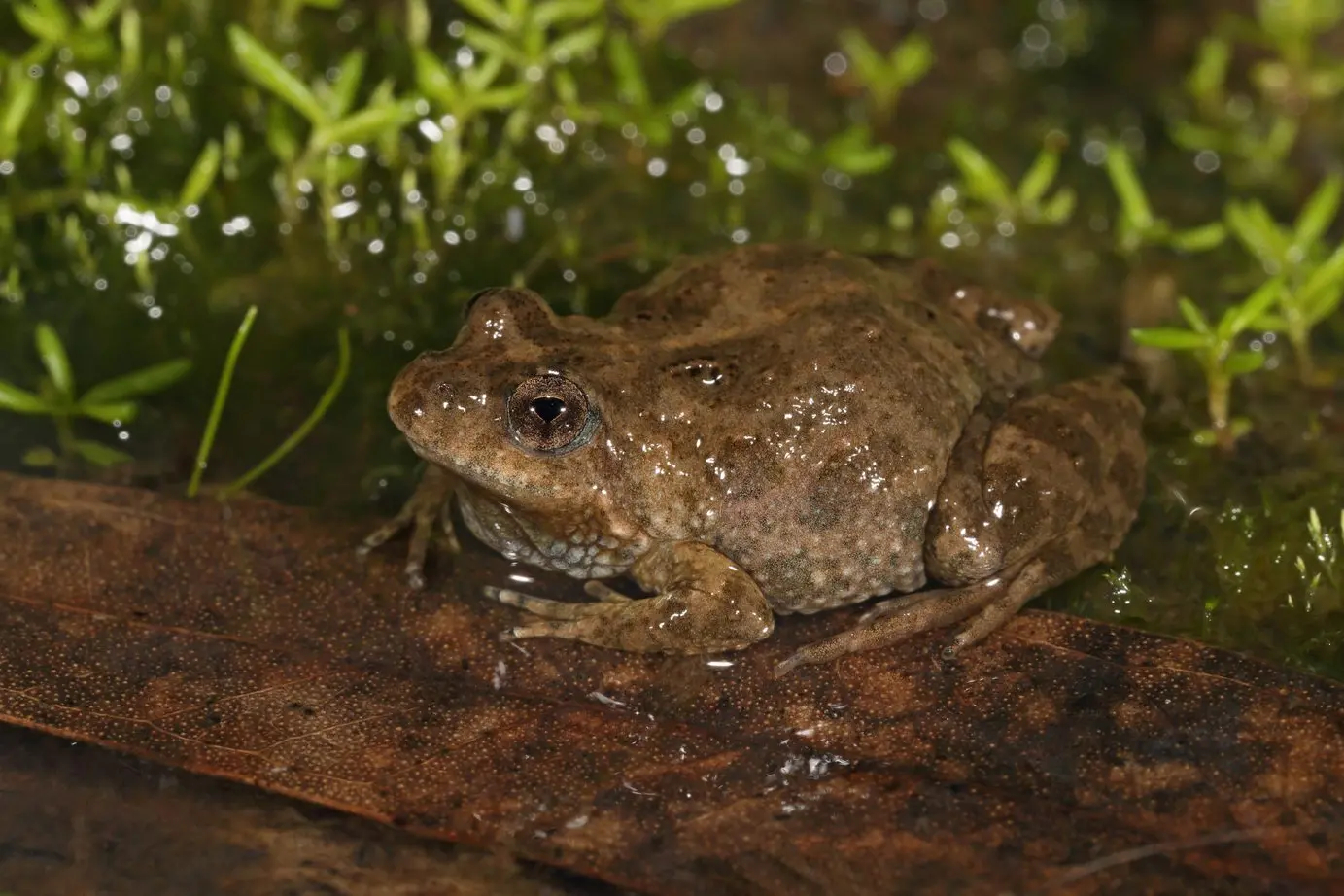
Among the dozen or so species of frogs that occur here in the North East, one tiny species – the Sloane's Froglet – is seldom encountered because of its shy behaviour and increasing rarity.
Sloane's Froglets are the smallest species of frog in our region, measuring 16–18mm, around the size of a five cent coin.
Their general body colour is a consistent light grey–olive–brown with darker khaki or brown blotches over their back and hind limbs, and two darker boomerang–shaped ridges over their shoulders.
Occasionally they have small orange–capped warts sparsely scattered over their back.
They can be similar in appearance to the related Common and Plains Froglets, both of which occur much more commonly throughout the region and sometimes even in the same waterbody.
Typically, these species are more patterned and with darker markings than the Sloane's Froglet, but variation in colour, pattern and texture is a feature of these froglet species, particularly the Common Froglet, and by far the most reliable method of identification is their call and calling behaviour.
The call of the Sloane's Froglet is a single, short 'eep', repeated about once every second in irregular bouts that never really last for more than a few seconds.
This compares to the more rapidly repeated ratchet call 'crick–crick–crick–crick' of the Common Froglet, and the longer drawn–out squelching 'eeeeek' of the Plains Froglet.
Also, Sloane's Froglets prefer to call whilst floating on the water's surface amongst emergent vegetation, whereas the Common and Plains Froglets usually call from the edge of the wetland.
Males typically give their advertising calls between the months of June–August, mostly at night but also at times during the day.
Formerly occurring over a broad part of North East and North Central Victoria, and adjacent areas of southern New South Wales, the range of the Sloane's Froglet has contracted extensively over the past 20 years.
The prolonged dry conditions of the millennium drought had a significant impact to the species' population and despite recent wetter years and the rejuvenation of many wetland areas, the population of the Sloane's Froglet has failed to recover, and the species appears to have disappeared from many parts of its former range.
As such, it has recently been listed as endangered at the national level.
Sloane's Froglets inhabit temporary and permanent waterbodies, favouring low–lying damp areas such as roadside ditches, depressions in open woodlands and paddocks and edges of farm dams where there is low marshy vegetation.
The main populations are now centered around the Corowa, Rutherglen and Albury areas, but there are several locations around Wangaratta that continue to support localised populations.
Over the past week or so, several have been heard calling from marshy depressions in the Killawarra and Waldara areas, and the Wangaratta Common Nature Reserve is also a good location to see and hear this species.