PHOTO
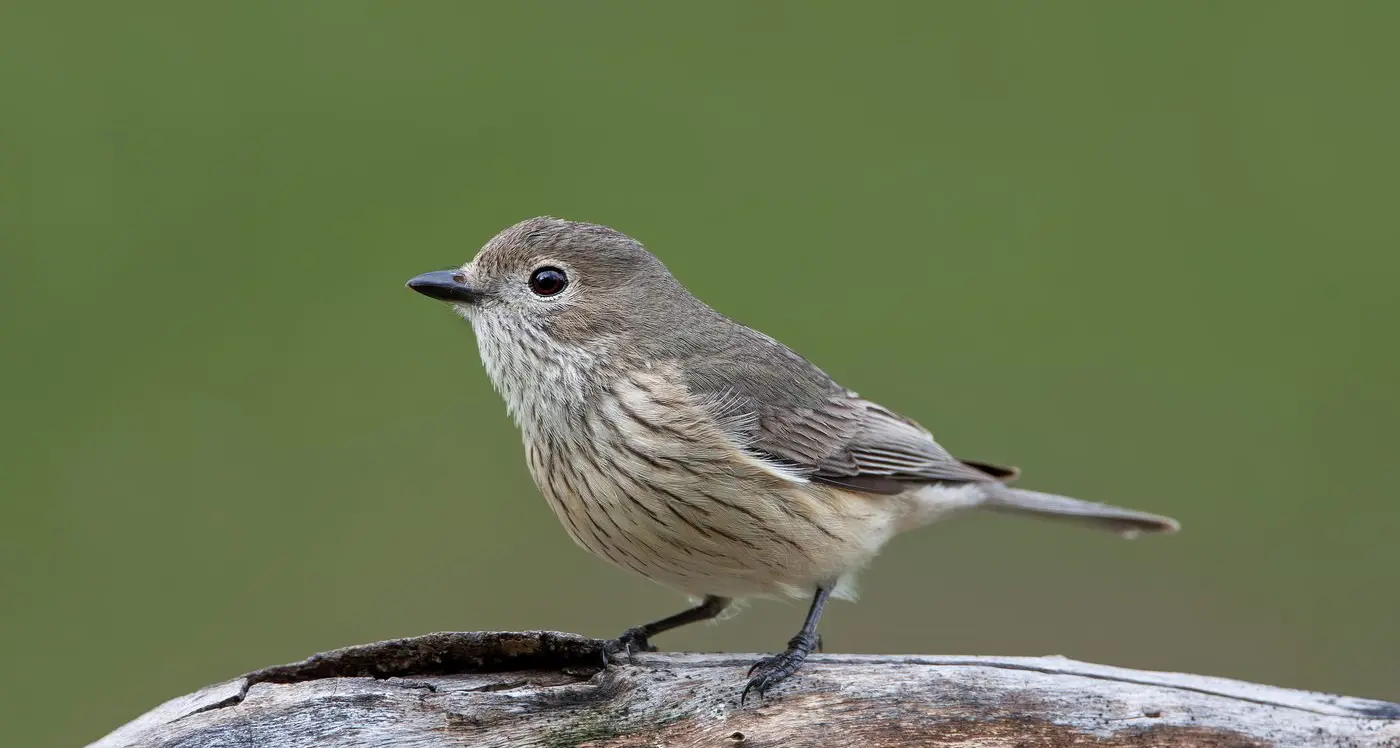
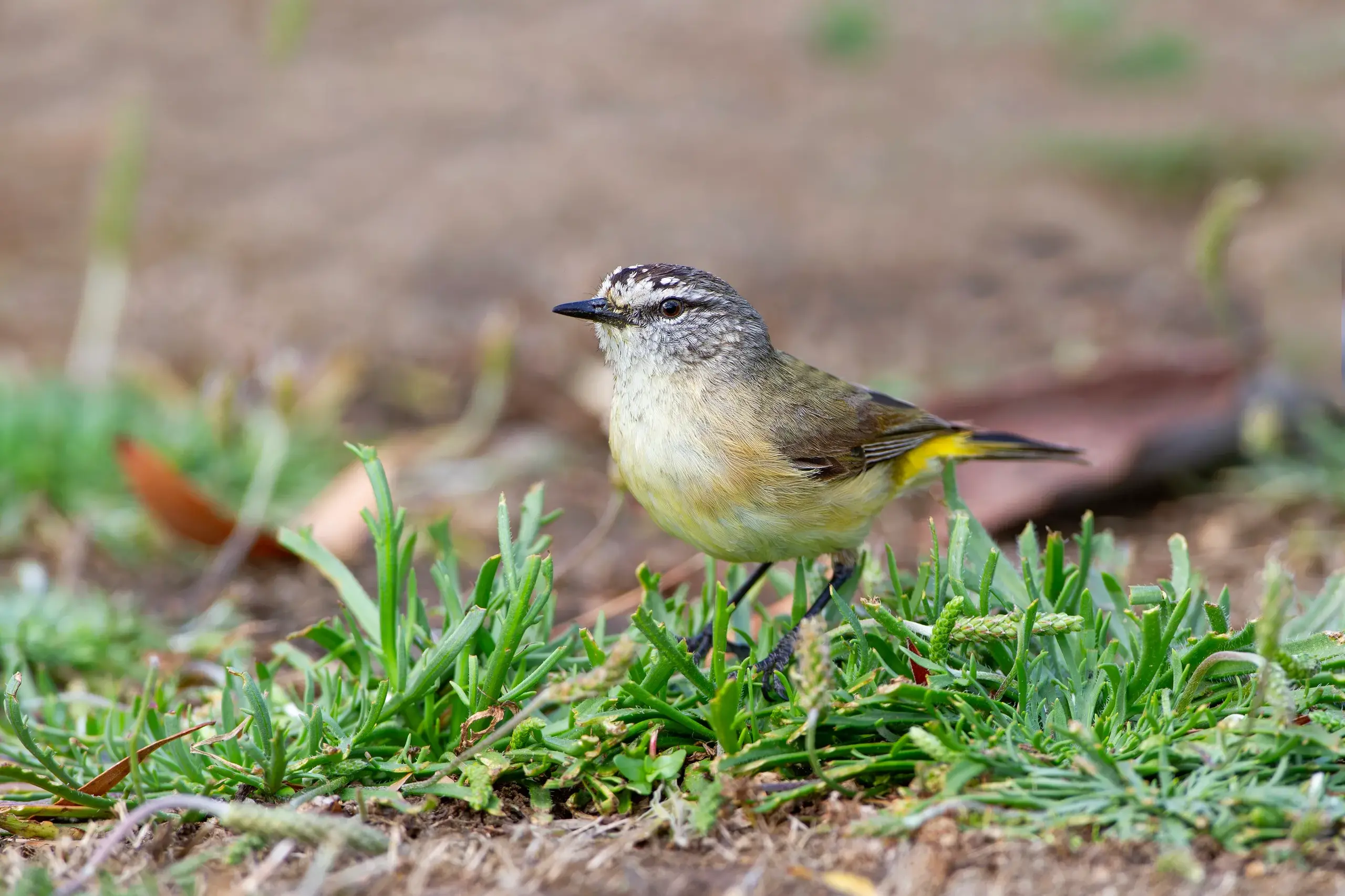
The Yellow-rumped Thornbill is a small bird although it is the largest and the best-known of the thornbill family.
These birds are regularly seen hopping along the ground in open areas in front of walkers or slow-moving vehicles, showing their striking yellow rump as they fly off.
They are mainly grey-olive to grey-brown above to cream below, with a white-spotted black crown and a dark eye stripe.
The tail is black, with white tips.
The sexes are similar.
Young birds have fluffier plumage on their bodies.
In our region the ground dwelling Yellow-rumped Thornbills are found in open habitats, amongst woodlands, forests and paddock grasslands with some trees.
They are common in agricultural lands, along watercourses, beside roads and in parks and gardens.
They are found in most regions throughout Australia outside of the tropics, deserts and coastal areas east of the Great Dividing Range.
The Yellow-rumped Thornbills feed mainly on insects, but also occasionally seeds.
They forage on the ground, more so than most other thornbills, but stay near tree cover and will sometimes feed in shrubs or trees.
They are often seen in small flocks feeding on the ground with other thornbills and occasional ground-feeding birds such as Grey Fantails and Weebills.
Yellow-rumped Thornbills sometimes breed co-operatively, with a pair being assisted by one or two helpers, which help to build the nest and feed the young.
The nest is a large and untidy structure built of grass and bark with two parts.
The upper part is a 'false' cup-shaped nest and the lower, a domed, nest-chamber with a hooded entrance.
The reason for the false nest is unclear, with theories like – deterring predators or parasitic cuckoos, a roosting place for male or fledglings or a 'practice' nest for the helpers.
The nest is usually in the dense foliage of trees, near the end of branches or in vines or mistletoe at a height varying between 1-8 metres above the ground.
The female incubates the eggs alone but is assisted by the male and any helpers with feeding and protecting the young.
For those wishing to find these delightful ground-dwelling birds listen out for their musical, cheery, tinkling song, as they feed in small groups in our parks and gardens or their flash of bright yellow as they fly up off the ground.