PHOTO
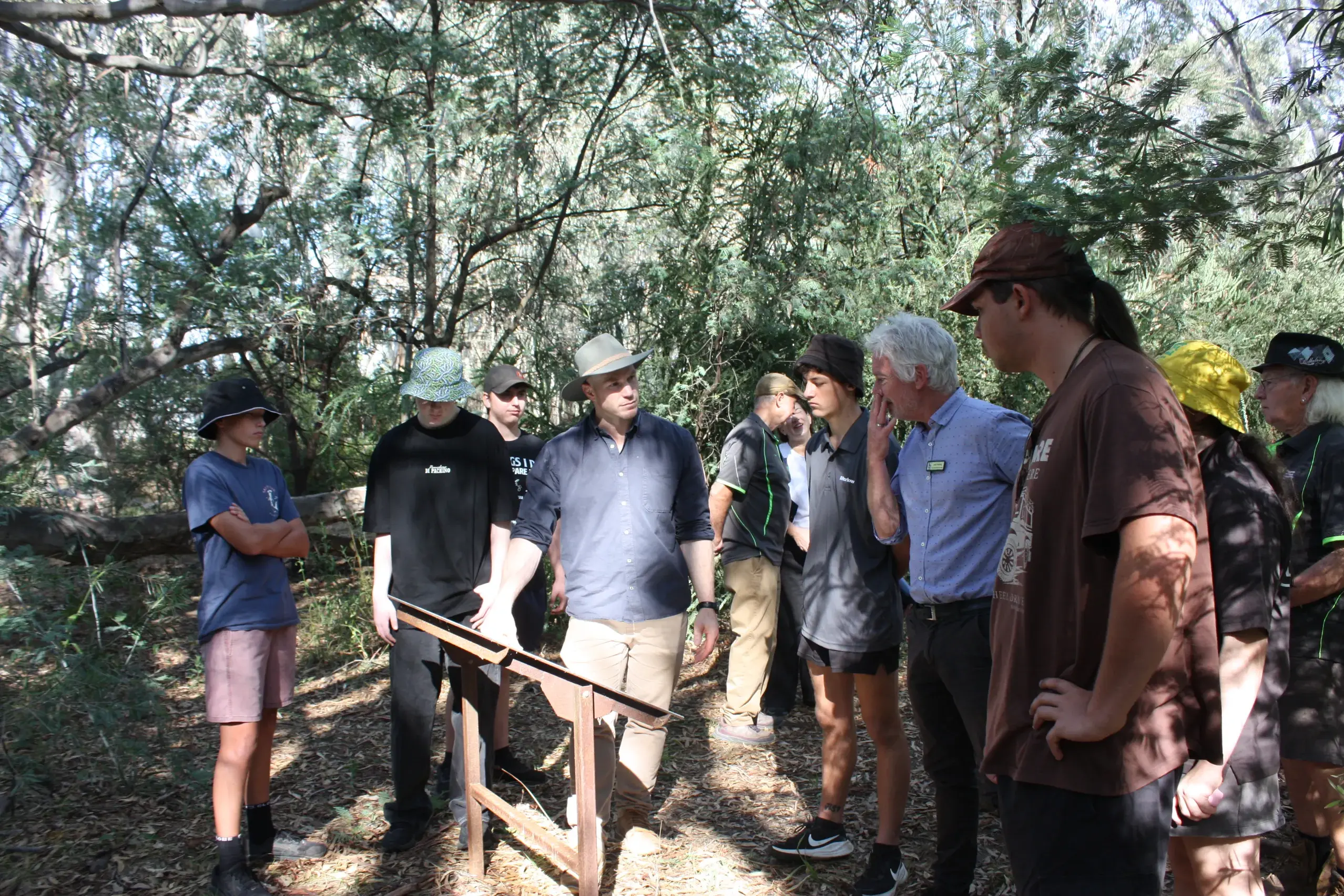
ACT Senator David Pocock visited Borinya Wangaratta Community Partnership last week, spending the morning learning about the school’s nature based learning programs, listening to students’ experiences, and even jumping in for a quick game of basketball.
The visit began with a Welcome to Country from Uncle Dozer, accompanied by a cultural dance shared by his grandson, Damien Thorpe, followed by an acknowledgment from Borinya staff and students, setting the tone for a day centred on connection, place and belonging.
Senator Pocock said he had heard a lot about the great work happening at Borinya through Indi MP Dr Helen Haines, with whom he collaborates regularly.
“I’m really keen to learn about the model, how you’re finding it, what you’re learning, and potentially see what we can replicate in Canberra,” he said.
“Young people are facing so many challenges, housing, loneliness, lack of connection, so it’s vital we look at ways to meet young people where they are.”
Students spoke openly with Senator Pocock about their personal journeys and the impact Borinya has had on them.
Seventeen-year-old student Chase Brock said arriving at Borinya for the first time was daunting, but transformative.
For Chase, the biggest difference is the human connection.
“At other schools you don’t get a connection with the teachers, it’s usually just a last name,” he said.
“But here, you get to know their experiences and what they’ve been through to become teachers.”
A major part of Borinya’s curriculum is its hands on environmental work at the Mullinmur Billabongs, where students are restoring native habitat and building filtration capacity by regenerating the area with strong plant populations.
Pastoral care and wellbeing senior leader Josh Hartwig said the students’ work is gaining recognition and that being on the radar of federal representatives matters.
“It’s an absolute honour,” he said.
“For a small setting with a small number of young people to be noticed by people who are effectively in our corner, it means a lot.”
Josh said community feedback makes a huge impact on students’ sense of pride and purpose.
“Showing young people the community values their contributions strengthens their sense of hope,” he said.
“The more we lean into community relationships, the more our young people can see they’re doing really great things."
Senator Pocock said programs like Borinya’s offer vital alternative pathways for young people for whom mainstream schooling may not be the right fit.
“There’s so much need to meet young people where they are,” he said.
“They’re doing exceptional work here and having access to nature based learning adds a whole extra dimension.”
He spoke about the importance of reconnecting with the land and the wellbeing benefits of time spent outdoors.
“Disconnecting from our devices and just being human beside a river, it does something to us,” he said.
“Seeing young people here connecting to Country and regenerating landscapes is really inspiring.”
From a policy perspective, Senator Pocock said investing in programs like Borinya makes long term sense.
“This is an investment in young people, an investment in our future,” he said.
“Helping young people who have been let down or for whom the system isn’t working, if we fund programs like this well, we can change the trajectory of so many lives.”
“There’s so much inspiration here.”