PHOTO
69498.0
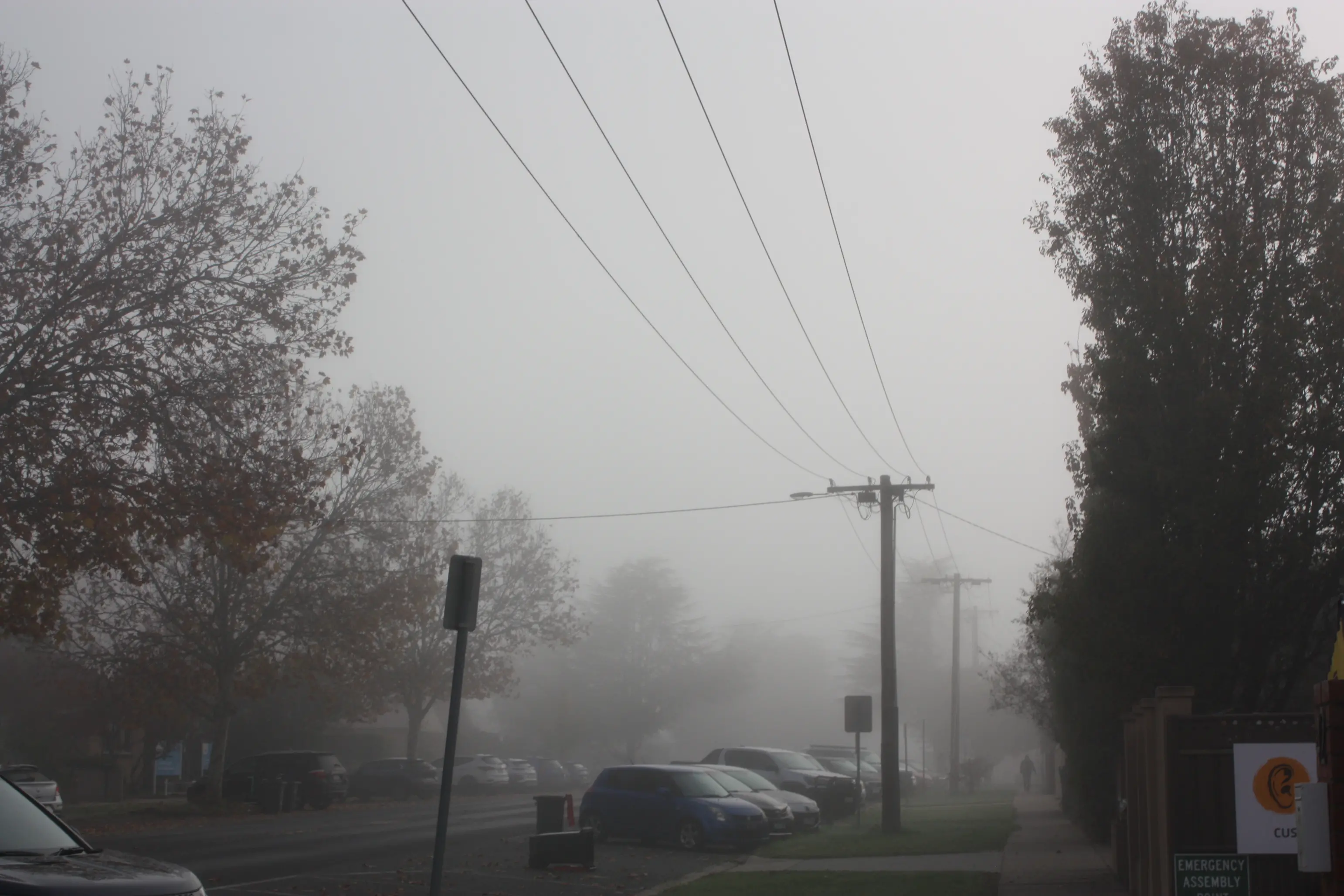
After a chilly, wet and foggy week across the Rural City of Wangaratta, it’s safe to say winter has arrived.
According to Bureau of Meteorology observations from the Wangaratta Aerodrome weather station, the mean minimum temperature in May was 6.1 degrees Celsius, which was 1.9 degrees above the historical monthly mean of 4.2 degrees.
The city’s mean maximum temperature for May was 18.4 degrees Celsius, just above the historical mean of 17.5 degrees, but well down on March’s 27.5 degrees and April’s 22.8 degrees, reflecting the seasonal shift into cooler conditions.
The warmest day of the month was the first day of May, when the temperature reached a maximum of 25.6 degrees Celsius.
The coldest minimum temperature recorded was 0 degrees Celsius on Friday, May 22.
A total of 47mm of rain was recorded, below the historical May mean of 54.7mm.
This brought the total rainfall for autumn to 163.2mm, and Wangaratta's total rainfall for the first five months of 2026 up to 217.2mm, just below the historical mean of 221.1mm.
The bureau’s long-range forecast for June to August shows rainfall is likely to be below average across much of southern, central and eastern Australia.
After a warmer-than-average autumn, daytime temperatures are likely to be above average across most of Australia except parts of the north, while overnight temperatures are also likely to be above average across much of the country.
Despite the warmer than average forecast, cold snaps bringing low temperatures, frost or snow are still possible during winter.
The bureau’s long-range forecast is updated fortnightly and considers a range of models and influences such as El Niño–Southern Oscillation (ENSO).
While ENSO is currently neutral, all models indicate El Niño is likely to develop this winter.
El Niño typically influences rainfall over northern, central and eastern Australia from winter into early summer, roughly June to December, with this influence typically peaking during the spring months.
While historical experience of El Niño events can create an expectation that these events will be the same each time they occur, no two El Niño events are the same.