PHOTO
This summer’s weather is a confronting reminder that in the ‘uncertain’ part of the drought cycle, there is rarely such a thing as simply ‘good’ or ‘bad’ weather.
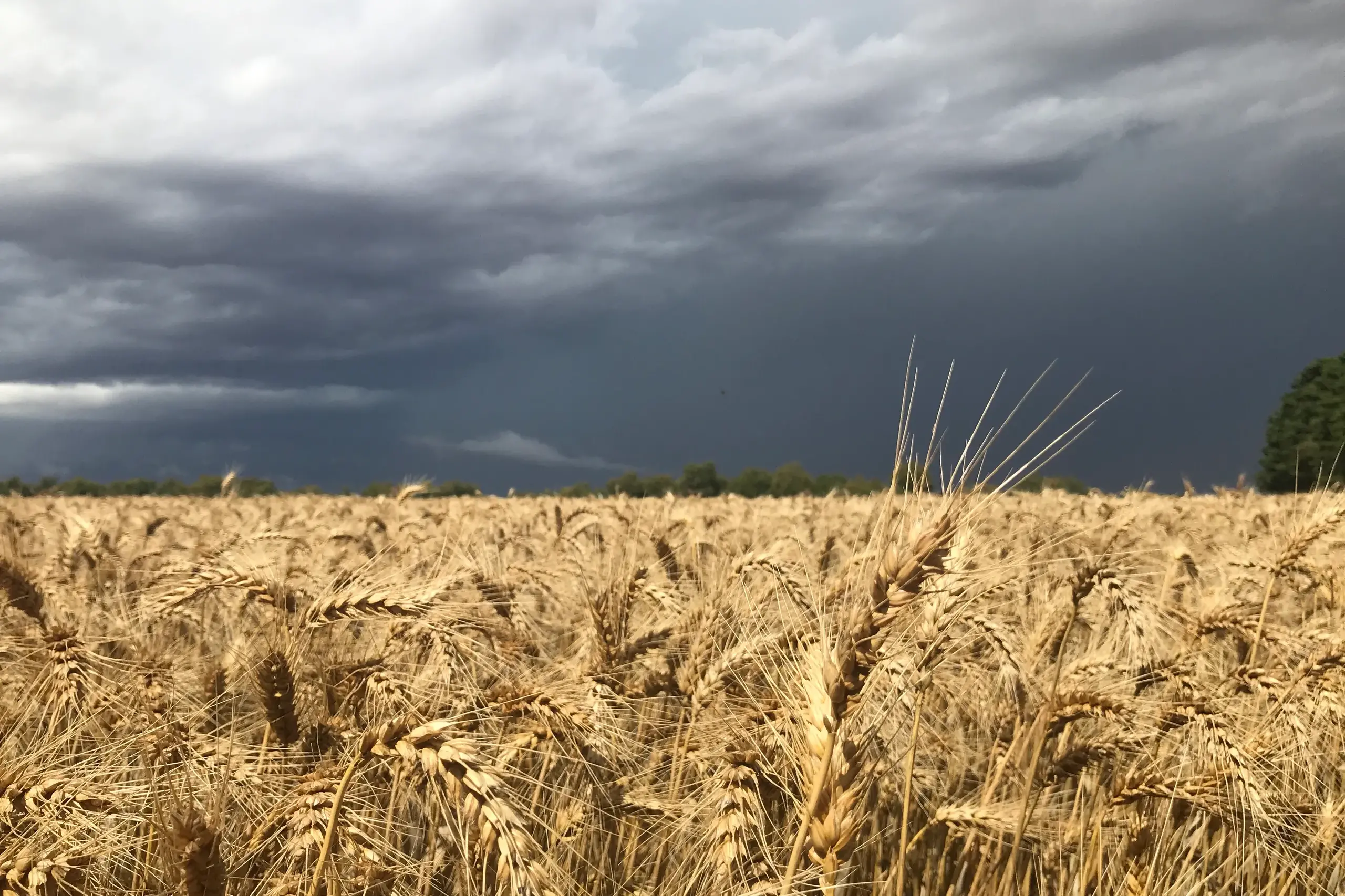
Victorian farmers were juggling two realities at once in early summer: the relief of rain after a long, uncertain season, and the heartbreak of seeing crops damaged or wiped out just as headers were rolling.
A season on a knife-edge
Across much of Victoria, rainfall in recent months has been patchy and below average, putting pressure on pastures, crops and water supplies even as some regions have caught timely falls.
Then, late spring and early summer storms delayed harvest in some districts and devastating crops in others, adding another layer of stress to what was already a high-stakes season.
This is exactly what the Vic Hub describes as the “uncertain period” in the drought cycle, when conditions sit on a knife-edge and every rainfall event has the potential to either buy time or compound losses.
For grain, hay and mixed farmers, that means managing risk while knowing that some events, such as severe storms at harvest, can undo years of careful planning in a single afternoon.
Many emotions, all valid
In this context, it is understandable that some producers welcomed the rain, while others felt only frustration and grief as flattened crops, hail damage or delayed harvest eroded yields and quality.
Communities carry the emotional load too, with small towns and supply chains heavily exposed to how this harvest plays out.
The Vic Hub’s work with farming communities has shown that drought and climate variability are more than technical and financial challenges, they are also deeply personal, affecting identity, intergenerational plans and community confidence.
Acknowledging that complexity is a first step in responding well, rather than assuming that any one weather event is either simply a “win” or a “loss” for the whole state.
What resilience looks like in the uncertain period
While no one can prepare perfectly for a severe storm at harvest, there are practical ways to build resilience before, during and after these events.
Farmers and advisers across Victoria are already using tools such as seasonal outlooks, soil moisture and feed budgeting, multi-year financial planning, and diversified enterprises to spread risk over time.
The Vic Hub and its partners work to connect producers with research, extension and peer networks that support these decisions, from drought-planning resources and technical guides, through to farmer-discussion groups and mental-health support pathways.
These efforts cannot prevent every loss, but they can help businesses and communities adapt, reorganise and keep options open as seasons swing between dry, wet and everything in between.
Standing alongside farmers and communities
As this harvest unfolds, it is important that sector leaders, services and policy-makers recognise the uneven impacts of the current weather, and listen closely to what affected farmers say they need in the weeks and months ahead.
For some, that might mean technical support to reassess feed, grain marketing or re-sowing plans; for others, it may be financial counselling, recovery programs or simply space to process what has been lost.
The Vic Hub remains focused on the long-term: supporting Victorian agriculture to navigate the uncertain period, prepare for future droughts and recover more quickly when shocks occur.
Right now, that also means naming the reality: this weather can be both a relief and a blow, and farmers living through it deserve recognition, practical support and a say in how resilience is built from here.
To explore these and other resources in one place, visit the Vic Hub resources directory at www.vicdroughthub.org.au.