
PHOTO
67885.0
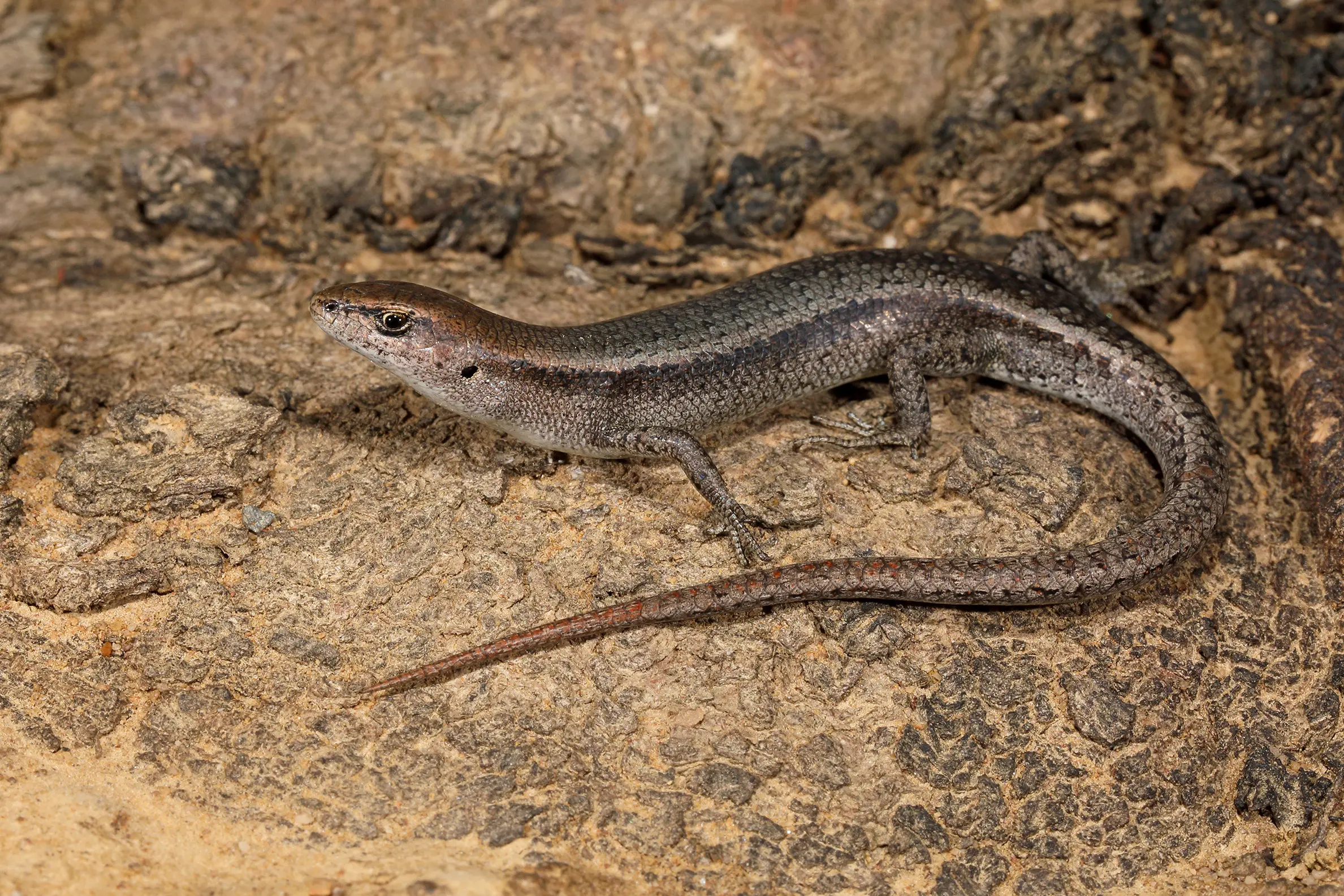
There are many reptile species living in house gardens across North East Victoria, and the Garden Skink is among the most common.
These small lizards are typically six to 10 centimetres long.
Their colour and pattern vary with some having fine speckling on the sides and back that creates a tiled effect, while others are plainer.
All have a dark stripe along each side, running from just behind the eye to the base of the tail.
Another key feature is the bronze head, which can shimmer iridescently in sunlight.
Several local species can look similar and share the same habitat, including Boulenger’s Skink, the Southern Rainbow Skink and the Grass Skink.
The Garden Skink’s bronze head, however, is the most reliable feature for identification.
Garden Skinks eat small invertebrates found in garden environments, including crickets, moths, slaters, earthworms, flies, grubs, caterpillars, grasshoppers, cockroaches, earwigs, slugs and small spiders.
They act as natural pest controllers, hunting during the day and swallowing prey whole.
Garden Skinks are oviparous which means that they lay eggs.
A female typically lays one to four small, soft-shelled eggs in decomposing vegetation beneath logs or fallen bark and may produce more than one clutch each year.
Many species, such as Garden Skinks, use shared nesting sites under logs or rocks, where multiple females will lay eggs together.
In urban backyard garden environments, numerous skinks often share the same rockery, woodpile, or sunny spot.
During the warmer months and even now, you may notice Garden Skinks more often in your backyard.
Enjoy watching and looking for them but take care as they are ‘drop-tail’ lizards and can shed their tails easily.
If you need to pick one up, use a gentle hold between your thumb and index finger and support the body in front of the back legs, well away from the tail.