PHOTO
66222.0
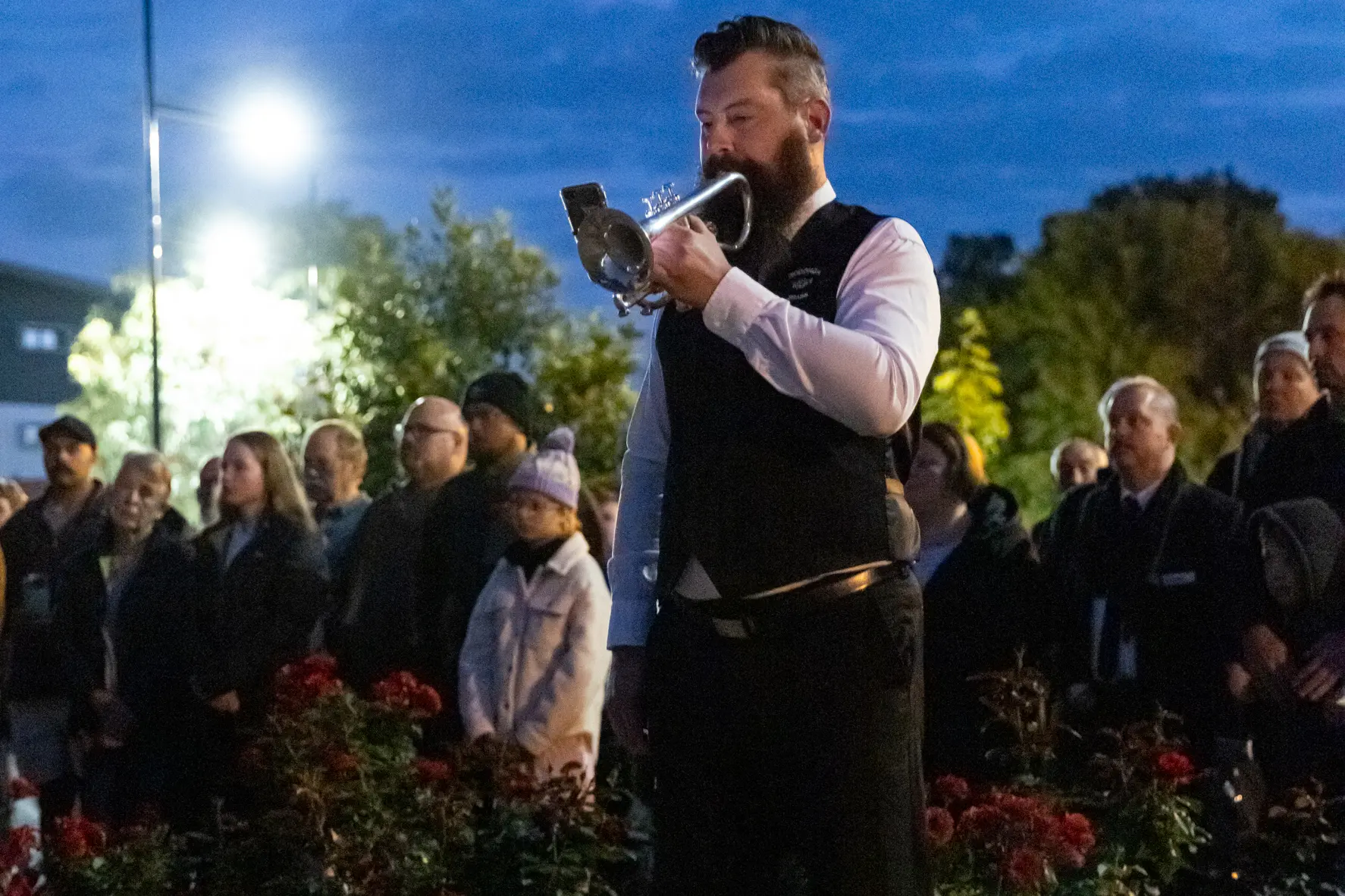
Two key elements of traditional ANZAC Day services are the playing of The Last Post, and recitation of The Ode.
As well as ANZAC Day and Remembrance Day services, The Last Post is sounded at military funerals, to indicate that a soldier has gone to his final rest.
In military tradition, The Last Post is the bugle call that signifies the end of the day's activities. During the evening, a duty officer moved around a unit's position, checking that sentry posts were manned, and sending off-duty soldiers to their beds.
The 'first post' was sounded when the duty officer started rounds, and a final bugle call indicated the completion of these rounds when the last sentry post was reached.
The Ode recited on ANZAC Day is the fourth stanza of the poem 'For the Fallen' by Laurence Binyon.
Binyon was assistant keeper of prints and drawings at the British Museum, and the author of several volumes of verse; 'For the Fallen' was first published in the London Times in 1914, and later in many anthologies of war verse.
It was selected in 1919 to accompany the unveiling of the London Cenotaph, and then passed into regular use across the Commonwealth.
Its most well-known lines are: 'They shall grow not old, as we that are left grow old/ Age shall not weary them, nor the years condemn/ At the going down of the sun and in the morning/ We will remember them.'
'In Flanders Fields', by Canadian Lieutenant Colonel J.M. McCrae (1872–1918), is another popular recitation.