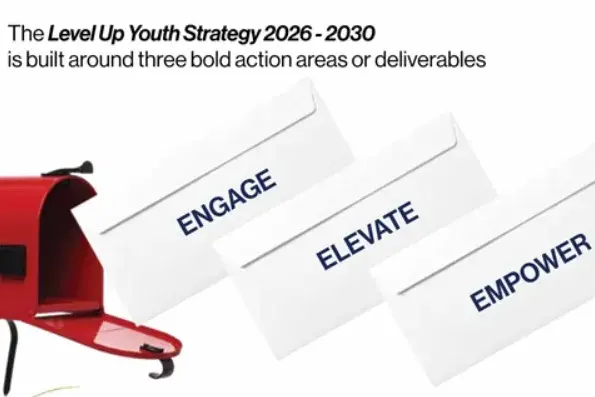
Feedback from 870 young people aged between 12-25 informed a new strategy via a youth census, identifying important issues for the Rural City of Wangaratta to focus on over the next five years.

The Level Up Youth strategy 2026-2030 was adopted by council last week and it's a document that aims to help council and community better understand, support, and respond to the needs of youth in the region.

A large portion of respondents expressed they want more spaces to hang out and more things to do in the rural city and the region.

In the eyes of young respondents, actions that would improve the region include more or better sporting facilities, more employment opportunities, better public transport, more supports for vulnerable young people, and more youth arts, music and cultural events/festivals.

The youth census also highlighted alcohol and other drugs as a major issue with 500 respondents indicating it as the top most important issue.

Feedback indicated that many young people appreciate the sense of belonging and the friendly community atmosphere in Wangaratta.

However, there is a call for a more vibrant environment with expanded retail options and more diverse entertainment facilities.

Safety is a significant concern, particularly at night and young people have expressed the need for more street lighting and safer public spaces.

Feedback through community engagement on the draft strategy document highlighted priority areas including safety and belonging, health and wellbeing, youth voice and leadership, places and spaces, and participation in education, training and work.

Respondents were asked if they were happy with council's shared vision for the strategy which includes: "Every young person in Wangaratta is supported to grow, lead, and shape their future, and our community, in a way that reflects their hopes, strengths, and potential".

Responses varied between age groups including 48.8 per cent of 12-15 year olds happy or very happy, 38pc were happy in the 16-19 bracket, 4.9pc were happy and 37.5pc neutral among 20-25 year olds, and an alarming 83.3pc of 25+ were unhappy or very unhappy (not part of target audience for strategy).

Health and wellbeing for young people was identified by participants as the number one theme which should receive focus by council and stakeholders next year.

There was some feedback that council could be overlapping on areas that are already being covered by local schools.

Councillor Tania Maxwell said she was surprised by the strategy and felt that it had an overuse of adult language instead of being compatible with young people.

"The amount of work, resources, stakeholder partnerships is enormous in this document, and some of it is, I feel, an over-reach in that we are potentially reciprocating what some of our stakeholders already do, ie. the schools," she said.

"However, after discussions with the officers I was informed that our role is to oversee some of this in a measured outcome perspective and I will accept what's been given here."

Cr Maxwell told the council meeting that she will be looking to liaise with the youth council on the measured outcomes.

She also wants to record and maintain data and information as to where council may be overstepping, what is under council's remit, and recording the benefits and outcomes available to our young people.

Cr Maxwell noted that some of the wants of young people are outside council's scope as they fall into the private enterprise sector, but this was information that could be communicated back to the young community via the youth council.