PHOTO
Stronger and more reliable funding from the Commonwealth has been raised as a major need by the Rural City of Wangaratta after representatives attended a federal inquiry into local government funding this week.
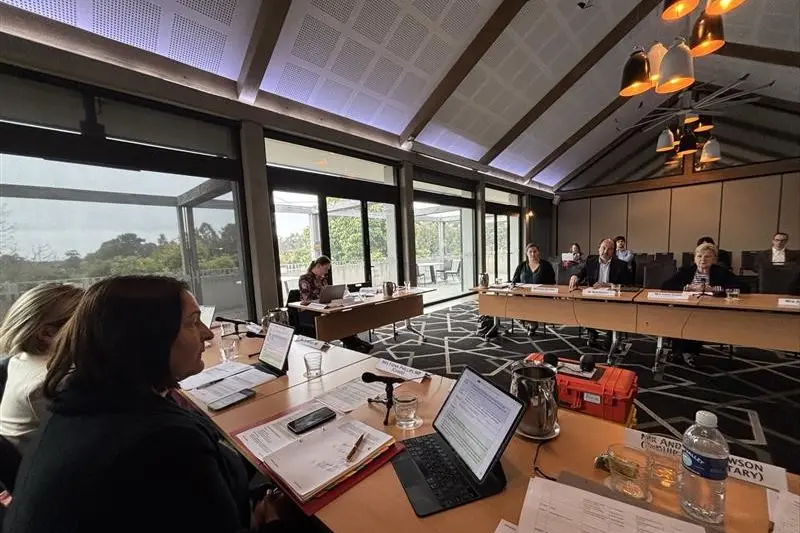
City Mayor Irene Grant and CEO Matt Nelson appeared at the Local Government Funding Inquiry overseen by Federal Parliament’s House of Representatives Standing Committee on Regional Development, Infrastructure and Transport.
The hearing follows council’s written submission to the inquiry made in January, in which Wangaratta outlined that councils are being asked to do more each year, yet funding models and national systems have not kept pace.
At the inquiry, council outlined three key issues: the need for stronger and more reliable recurrent funding; support for critical regional infrastructure and disaster resilience; and national leadership on productivity through digital integration and shared services.
Cr Grant’s opening statement emphasised the breadth of council’s services and funding challenges.
“Like many regional councils, we are on the frontline of infrastructure delivery, emergency response and essential community services, but funding frameworks have not kept pace with the needs and expectations of our region,” she said.
On recurrent funding, Mr Nelson told the committee that councils need sustainable, predictable support.
“Council is seeking stronger, more reliable recurrent funding that provides certainty to plan, keeps pace with inflation to maintain assets, and delivers essential services sustainably,” he said.
He noted that while programs like Financial Assistance Grants and Roads to Recovery are vital, their value has fallen in real terms, contributing to local funding shortfalls.
Mr Nelson also warned that cost shifting, when other levels of government transfer responsibilities without adequate funding, has left Wangaratta absorbing millions in extra costs.
While addressing critical infrastructure and resilience, Mr Nelson highlighted the need for better funding to unlock housing growth and maintain key assets.
“For Wangaratta, enabling backbone infrastructure is the key to delivering housing and economic growth,” he said, pointing out that significant investment in local roads, water and sewerage is necessary to support thousands of additional homes.
Mr Nelson argued that national funding approaches must evolve to help councils build resilience against recurring disasters by supporting infrastructure betterment and speeding up relief funding to disaster-affected communities.
On productivity and coordination, council urged the Commonwealth to lead a digital integration drive so local services connect seamlessly with state and federal systems.
“Residents increasingly expect seamless digital access to government services, yet the current experience is fragmented across federal, state and local systems,” Mr Nelson said.
National coordination on technology, shared systems, and workforce skills would help rural councils like Wangaratta modernise services and keep up with emerging challenges such as AI.
Cr Grant and Mr Nelson also fielded questions from the committee on Commonwealth-funded programs received by council, Wangaratta’s capacity for growth and the local Housing Support Program, the effects of cost shifting on council finances, and the impact of the Disaster Ready Fund on regional recovery efforts.
In closing, Mr Nelson outlined how council is committed to working constructively with all levels of government to deliver outcomes for regional communities.
"Strong relationships across local, state and Commonwealth levels are essential to delivering shared objectives and unlocking regional growth," Mr Nelson said.
"This is particularly true with the role local government can play to co-invest with the federal and Victorian governments to meet their housing objectives"
Council looks forward to working constructively with the federal government and Indi MP Helen Haines to improve the lives of our community and the council’s financial sustainability.