
PHOTO
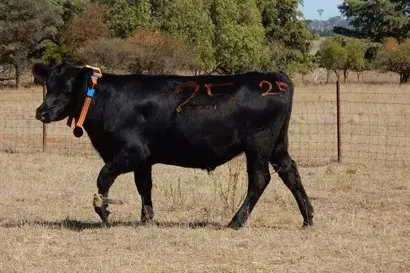
Collars with GPS and wireless technology to control livestock without physical fences or barriers is being regulated in Victoria, touted as a gamechanger for the agricultural sector.
Minister for Agriculture Ros Spence announced the new regulations under the Prevention of Cruelty to Animals Act 1986, giving farmers access to virtual fencing and herding technology.
These new regulations come with safeguards and clear requirements, providing farmers with smarter tools to manage livestock with precision, boost productivity, and keep animal welfare a top priority.
Victorian manufacturers can now apply to Agriculture Victoria for their virtual fencing technology to be approved, with the first products expected to be approved in early February 2026.
Wangaratta livestock agent Harvey Benton, who is also a councillor overseeing the agriculture portfolio, said the technology would work as a replacement of internal fencing but not boundary fences.
An independent scientific review found that secure physical outer fence boundaries that contain the animals and prevent them from straying onto roads, railway lines or neighbouring properties would still be required.
Mr Benton also has reservations about the use of the electric shock technology on certain types of cattle, especially younger stock.
"It would be all very well to use it on dairy cows but I wouldn't like to see someone try and wean some young beef cattle with it because they would just go ballistic," he said.
"I would say insurance companies would walk away from you, and while some people use electric fencing for their boundaries now, it's alright until there is a power outage."
Mr Benton said it would be okay as part of an intensive farming operation when operators are on the ball all the time.
"But if it's allowed to be used willy nilly there is room for problems to occur," he said.
"There is a lot of detail and if the regulations are based on theory alone and not practicality, it's on a path to disaster."
The approval conditions will include requirements for record keeping and reporting.
Farmers adopting this technology will need to comply with certain requirements.
This involves using approved technologies, completing manufacturer training, maintaining a physical boundary fence or barrier and ensuring collars are checked regularly.
The new regulations were developed following engagement with industry, manufacturers, researchers and animal welfare groups on virtual fencing to better understand the impacts of this technology on animal welfare.
A demonstration had dairy cattle fitted with solar-powered smart collars that use audio, vibration and electronic cues to contain animals within a virtual fence and guide them to areas of the farm via a mobile phone app.
The system also allowed farm staff to monitor the cows’ location, health and reproductive status.
The trial demonstrated how virtual fencing technology can enhance livestock management, enabling farmers to monitor animal health and location in real time.
Electronic collars for livestock species other than cattle can only be used when a scientific licence has been granted under the POCTA Act, and the use is approved by an animal ethics committee.